





Rents across the UK rose 5% year-on-year for the second month in a row, according to the latest Goodlord Rental Index.
The Goodlord team
Nov 5, 2026
October saw UK rents rise by 5% year-on-year, according to the latest Rental Index from Goodlord. This marks the second month running that annual growth has held at 5%, a figure which is significantly above 2026 inflation figures.
However, despite month-on-month rental growth in all regions, the pace of monthly rental rises cooled slightly to 0.6% (down from 0.9% in September), and voids also lengthened, suggesting that the market may be inching towards its traditional winter cool-down.
- Monthly growth cools, but every region sees a rise
- Lengthening voids points to a cooler winter ahead
- Analysis from Goodlord CEO, William Reeve
Another 5% month for year-on-year rents
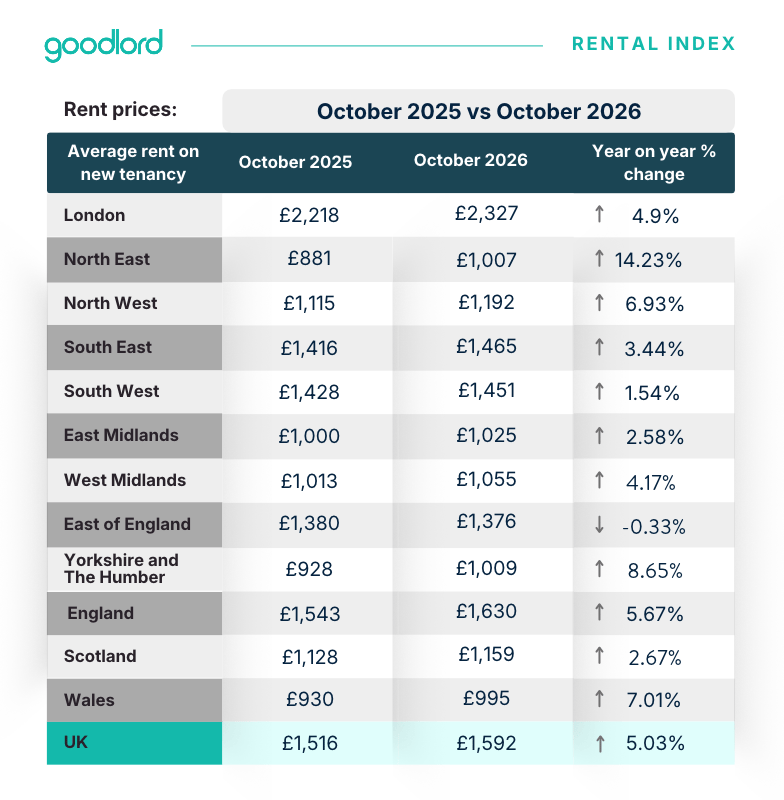
Across the UK overall, rents have risen by 5% over the last year. This matches the annual rental increase seen in September and is significantly higher than the 3.1% annual rental inflation rise recorded by the Index in October last year (2025).
The 5% increase in rental prices is also outstripping wider inflation metrics, with UK inflation currently sitting at 3.6%.
In October 2025, average rents were £1,516 per property. Last month, this had risen to £1,592. For tenants, this means properties are costing them £912 more per year compared to 2025.
Wales saw the sharpest annual rise - with rents up 7% in a year. In England, rents were up by 5.7%. Scotland posted the most modest rental inflation, with year-on-year prices up by 2.7%.
At a regional level, all regions recorded a year-on-year increase in rents with the exception of the East of England, which saw a marginal (0.3%) decline.
The North East once again recorded the most eye-catching increase, with rents up 14.2% year-on-year. Rental averages in the region were £881 this time last year, compared to £1,007 today, an increase of £1,512 per year for tenants in the North East.
Yorkshire and the Humber also recorded a significant increase. Annual rent growth in the region was up by 8.7%.
Monthly growth cools, but every region sees a rise
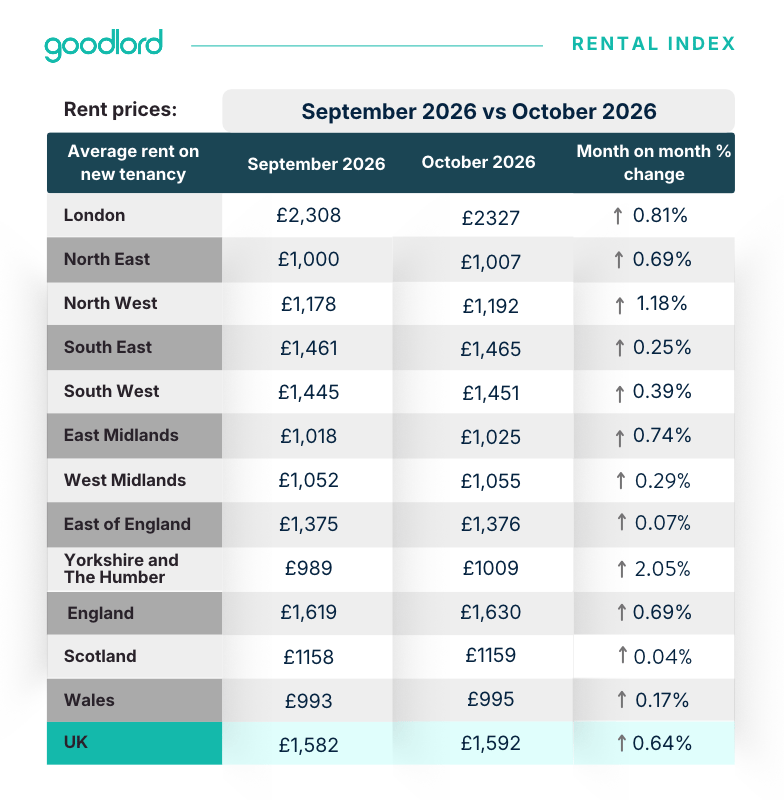
Between September and October, rents across the UK rose by 0.6%, a slower pace than the 0.9% recorded the previous month. Despite this, rents still rose in every region monitored by the Index.
Yorkshire and the Humber recorded the biggest rise at 2.1%, reversing last month’s dip. The North West followed at 1.2%, though this was well below the 3.1% month-on-month increase recorded in the region in September.
The sharpest slowdowns were in the regions that led the way last month. The North East, which jumped 5.6% in September, rose by just 0.7%, while the South West slowed to 0.4%, down from 2.5%.
Lengthening voids points to cooler winter ahead
Despite buoyant rental figures, the market’s void periods in October hint at a coming winter cool-down. The average void period in October was 28 days, up significantly from the 20 days recorded in September. This is also much higher than the same time last year, when voids hit 21 days.
Greater London recorded the shortest voids, averaging 25 days. Wales had the longest voids, with properties sitting vacant between tenancies for 34 days on average, followed by Yorkshire and the Humber at 32 days. The North East, which recorded spiking rents and void periods of just 11 days in September, saw voids lengthen to 28 days.
Goodlord CEO, William Reeve, comments:
“The headline figures this month haven’t changed: rental inflation continues apace and the market is putting the squeeze on tenant incomes. As predicted, we believe that this rental inflation is an unintended consequence of the Renters’ Rights Act; factors including the ban on over-bidding and annual rent reviews are combining to push up rents, compounded by continuing constraints on supply.
“However, the underlying metrics point to the likelihood of a cooler few months ahead, as month-on-month price rises lose some of their heat and voids start to lengthen. The winter is often the slowest period of the year for the lettings market, although this seasonal predictability has been clouded by a range of impacting factors over the last year, namely the introduction of the Renters’ Rights Act. It means we can’t take anything for granted this early in the season.”