









Rents across England stayed relatively steady in February as the market continued to show signs of subdued demand.
The Goodlord team
Mar 3, 2026
According to the Goodlord Rental Index, rents are now up 2% year-on-year. This is lower than the latest annual inflation figures and a significant reduction compared to the pace of rental growth recorded at the same time last year.
Based on thousands of verified tenancy transactions each month, the Goodlord Rental Index captures true market value. These figures reflect confirmed tenant contracts, thereby excluding marketing inflation or any aspirational pricing on property listings

- Rents up 2% year-on-year
- Month-on-month rents prove sticky
- Void periods shorten across England
- Analysis from Goodlord CEO, William Reeve
- Rental Index methodology
Rents up 2% year-on-year
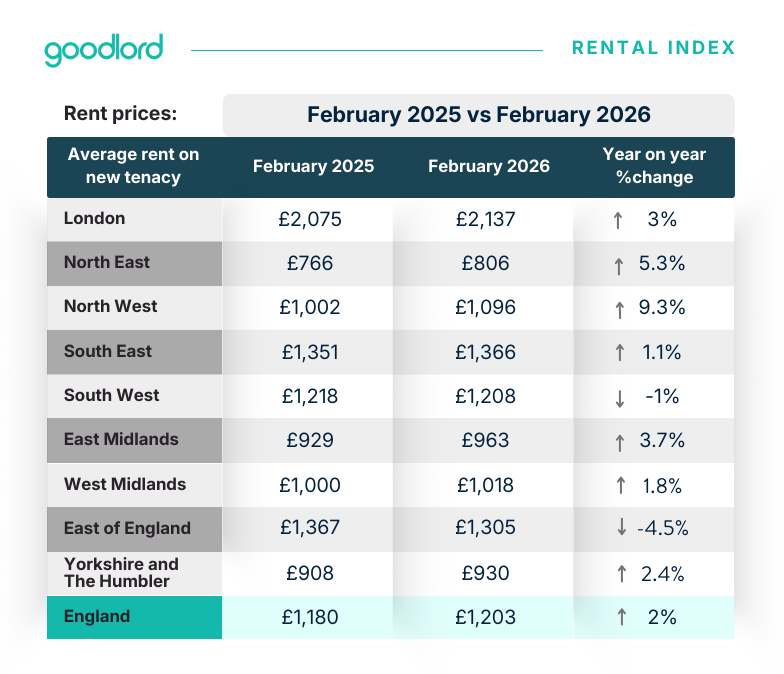
The average cost of a rental property in England during February 2026 was £1,203. This is a 2% increase on prices recorded at the same time last year (February 2025), when rents averaged £1,180 per property.
This is a significantly lower level of rental inflation when compared to figures recorded last February. At the same time in 2025, rents were up 4% year-on-year.
This is also lower than the year-on-year inflation recorded last month. In January, YoY rents were up by 2.4%.
February’s figures mean rental inflation continues to sit below the latest Consumer Price Inflation figures, which were recorded at 3.2% in January, and below wage growth, which stands at 4.2% according to the latest figures.
At a regional level, year-on-year rental costs have actually dropped in some regions. Tenants in the East of England are currently enjoying prices that are 4.5% lower than in February 2025. And those in the South West have also seen a 1% annual reduction in average rents.
Elsewhere, the North of England continues to lead the pack when it comes to rental growth, similar to trends tracked last month. The North West saw year-on-year prices rise by over 9% during February (up from £1,002 per property last year, to £1,096 this year). And the North East posted a 5% rise.
Month-on-month rents prove sticky
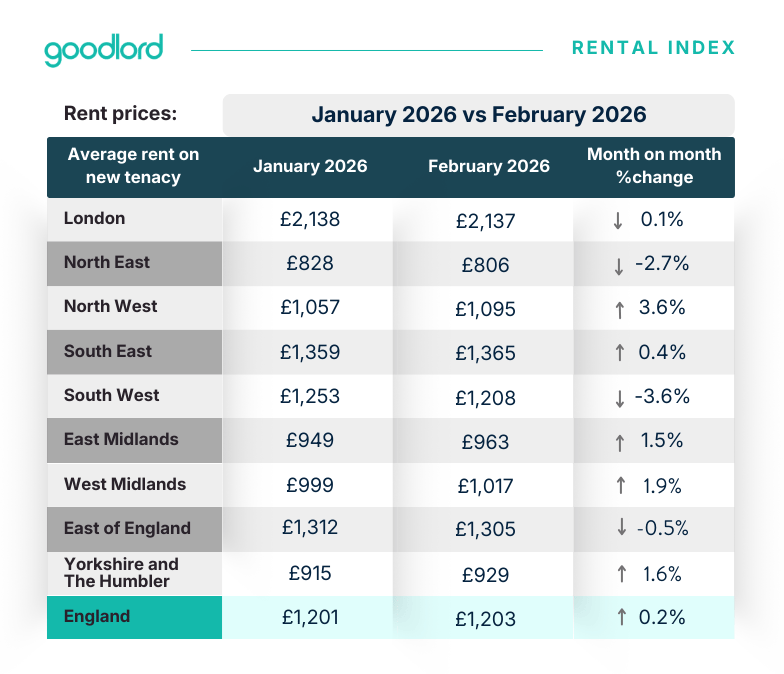
Across England, month-on-month rents remained very sticky. In January, the average cost of rent was £1,201. In February, this rose by just 0.15% to £1,203 - a difference of just £24 per year.
The biggest rise was, once again, seen in the North West. Prices here rose by nearly 4% - up from £1,057 to £1,096.
The biggest fall was recorded in the South West, where prices dropped by over 3.5% - down from £1,253 in January to £1,208 in February.
Whilst month-on-month rental averages further reinforce the picture that the market is softening, the Index typically records minimal month-on-month rental price changes between January and February each year.
Void periods shorten across England
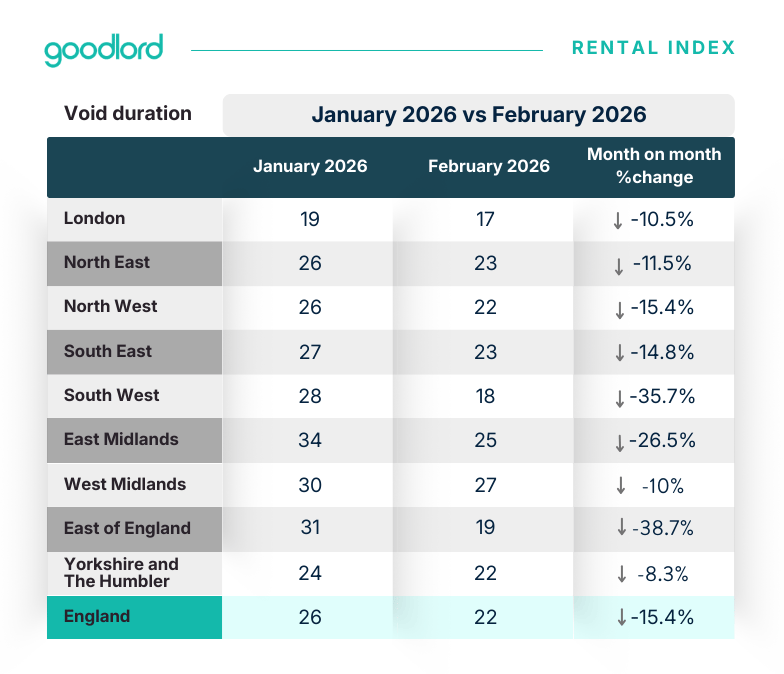
Despite softening price inflation, voids shortened during February after a particularly sharp increase during January. Across the month, voids - the length of time a property is vacant between lets - decreased from 26 days to 22 days. This is a reduction of 15%.
Voids shortened in all regions monitored. The biggest shift was seen in the South West, where voids shortened from 28 to 18 days. The smallest reduction was recorded in Yorkshire and the Humber, where voids moved from 24 days to 22 days.
Overall, void periods are longer on average when compared with the same time last year. In February 2025, voids were 20 days, compared to 22 days currently.
William Reeve, CEO at Goodlord, comments:
“Another month of cooling rental inflation reinforces the picture that the market is returning to some form of equilibrium after a series of record-breaking years. This is good news for tenants, particularly if rental price increases continue to sit below wage growth figures. It’s also a positive sign that there isn’t a supply shortage, despite the wider regulatory turbulence that landlords are navigating. If these trends continue into spring, it could provide a relatively benign backdrop for the Renters Rights Act implementation on 1 May.”